
Culture and Art
"A Touch of Hope": Amal Hamdan presents her latest publication to the Governor of Yanbu
Media personality and writer Amal Hamdan presented her latest publication, “A Touch of Hope,” to Yanbu Governor Saad bin Marzouq Al-Suhaimi at his office in the governorate.
And he took

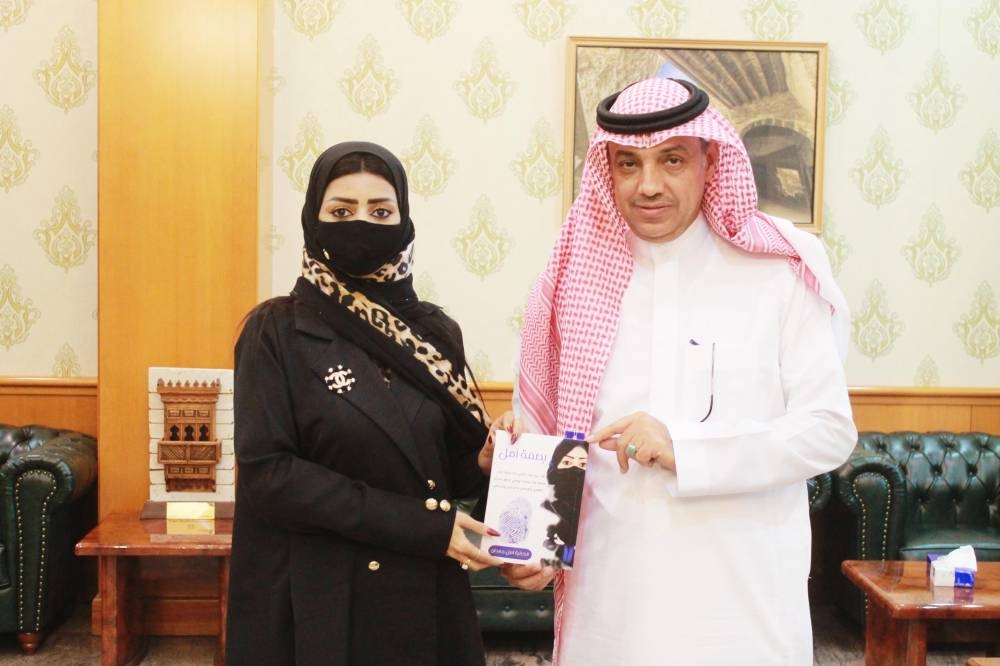
Media personality and writer Amal Hamdan presented her latest publication, “A Touch of Hope,” to Yanbu Governor Saad bin Marzouq Al-Suhaimi at his office in the governorate.
The book addresses the media and cultural movement in light of Saudi Vision 2030, and the strengthening of the media’s role through the Quality of Life Program. The author recently launched it at the Riyadh International Book Fair in the presence of a number of intellectuals and writers. The book was published in four chapters, each chapter addressing an area of her field experience.
Amal Hamdan said: “The book is the culmination of three years of work to serve the nation and achieve Vision 2030, and it stands as a testament to the empowerment of Saudi women in various fields.”.
The Governor of Yanbu expressed his gratitude to the media writer Amal Hamdan for her contributions to the fields of media, culture, and authorship.


Culture and Art
The White Nightingale Crisis: An official apology to the family of Abdel Halim Hafez
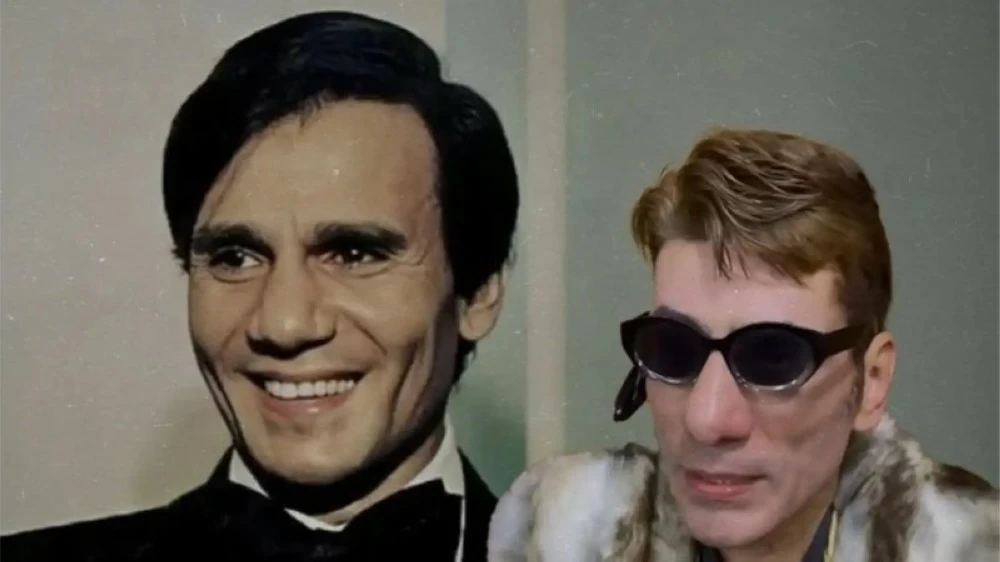
Content creator Tamer Shaheen, nicknamed 'The White Nightingale', apologizes to the family of artist Abdel Halim Hafez after legal threats, pledging to stop the controversial content.
A formal apology ends the controversy
In a move aimed at ending the ongoing controversy, content creator Tamer Shaheen, known on social media as "The White Nightingale," issued a formal apology to the family of the late Egyptian artist Abdel Halim Hafez. This apology came after the family announced their intention to take legal action against him, accusing him of exploiting the name, image, and legacy of the legendary singer in content they deemed offensive and damaging to his great artistic heritage. In televised statements, Shaheen pledged to refrain from any appearances that might cause distress to the family of the iconic artist, emphasizing his complete respect for Hafez's artistic and historical stature.
Background of the crisis and the legacy of the dark-skinned nightingale
The artist Abdel Halim Hafez, nicknamed "The Dark-Skinned Nightingale," holds a unique place in the hearts of millions in Egypt and the Arab world. For over two decades, he presented a timeless artistic legacy of songs and films that have become an integral part of Arab cultural memory. After his passing in 1977, his family, specifically his nephew, Professor Mohamed Shabana, undertook the task of preserving this legacy from any distortion or inappropriate commercial exploitation. This incident comes within the context of ongoing efforts by the heirs to protect the intellectual and literary property rights of the late artist, which are often vulnerable to infringement in the digital age.
The impact of the case and its legal dimensions
This incident highlights an important issue concerning the boundaries of creativity and the rights of public figures' heirs. While the digital space offers ample opportunities for content creators to express themselves, it also presents legal and ethical challenges regarding how to handle celebrity legacy. The actions threatened by Abdel Halim Hafez's family send a clear message that artistic heritage is not public property to be used without restraint, especially if the use aims to achieve fame or profit in a way that might tarnish the original artist's image. In his defense, Shaheen emphasized that he never intended to compare himself to the Nightingale, stating, "I disavow that and I will not become Abdel Halim," explaining that he portrays diverse artistic characters and is not simply imitating a single figure.
The future of celebrity-inspired content
With Shaheen's retraction and apology, the crisis appears to be nearing resolution, but it leaves a significant mark on the media landscape. It sets a new standard and serves as a reminder to content creators of the need to respect artistic icons and their legacy. It may also encourage the heirs of other artists to take similar steps to protect their loved ones' heritage. Ultimately, this incident underscores that the stature of an artist of Abdel Halim Hafez's caliber remains vibrant and influential, and that the public's love and his family's appreciation form a strong shield protecting his legacy from any attempt to tamper with it or diminish its value.
Culture and Art
The truth about Yasmine Abdel Aziz's new series "We Forget What Was"
Screenwriter Amr Mahmoud Yassin denied that the series “We Forget What Was” was inspired by Yasmine Abdel Aziz’s personal life after her separation, stressing that the work is a social drama.

A firm denial of any connection to personal life
Screenwriter Amr Mahmoud Yassin has put an end to the controversy surrounding his new series, "We Forget What Was," scheduled to air during the upcoming Ramadan drama season. He categorically confirmed that the work is not based on any real events related to the personal life of its star, Yasmine Abdel Aziz. This clarification came in response to speculation linking the series' plot to her recent separation from actor Ahmed El Awady and the ensuing media attention and online campaigns.
On his official Facebook page, Yassin emphasized the independence of his artistic decisions and creativity, stating, "I deeply respect my profession, and my voice comes from my own mind." He indicated that all his work stems from his imagination and his personal vision of society, not from the artists' personal lives. He affirmed that the writing process is a collaborative, professional endeavor, where scripts undergo meticulous review of every word and letter during filming to ensure the delivery of a cohesive and polished work of art.
The context of speculation and the importance of Ramadan drama
These rumors arise amidst widespread public interest in the lives of celebrities, particularly Yasmine Abdel Aziz, who enjoys immense popularity in Egypt and the Arab world. The announcement of the series coincided with a period of intense media attention on her personal life, leading some to draw parallels between the drama and reality. The Ramadan drama season is considered the most competitive arena for television production in the region, with major production companies and stars vying to present their best work. Yasmine Abdel Aziz's projects consistently garner high viewership and top search engine rankings.
The author's denial of this connection is particularly significant, as it puts an end to speculation and directs the audience's focus to the dramatic story itself and its artistic merit, rather than searching for parallels with the protagonist's real life. This clarification also reflects the creators' commitment to separating art from the personal lives of their stars, a fundamental professional principle.
Details of the series "And We Forget What Was"
The series "We Forget What Was" falls under the category of social dramas that blend suspense and human drama. It is expected to present a fresh and unique story, capitalizing on the on-screen chemistry between Yasmine Abdel Aziz and the new lead actor, Karim Fahmy, in their first collaboration. The series also features a stellar cast, including Sherine Reda, Khaled Sarhan, Menna Fadali, Mahmoud Yassin Jr., Mohamed Lotfy, Mahmoud Hafez, and Ehab Fahmy.
The series is written by Amr Mahmoud Yassin, who previously collaborated with Yasmine Abdel Aziz on successful projects such as "Elli Maloush Kbeer" (He Who Has No Big Shot), and directed by Mohamed El-Kheibery. With Ramadan approaching, Arab audiences eagerly anticipate this series as one of the most prominent works on the drama scene, expecting it to achieve great success befitting its stars and creators.
Culture and Art
Khaled El Sawy: The story of my failure and success in the world of art and acting
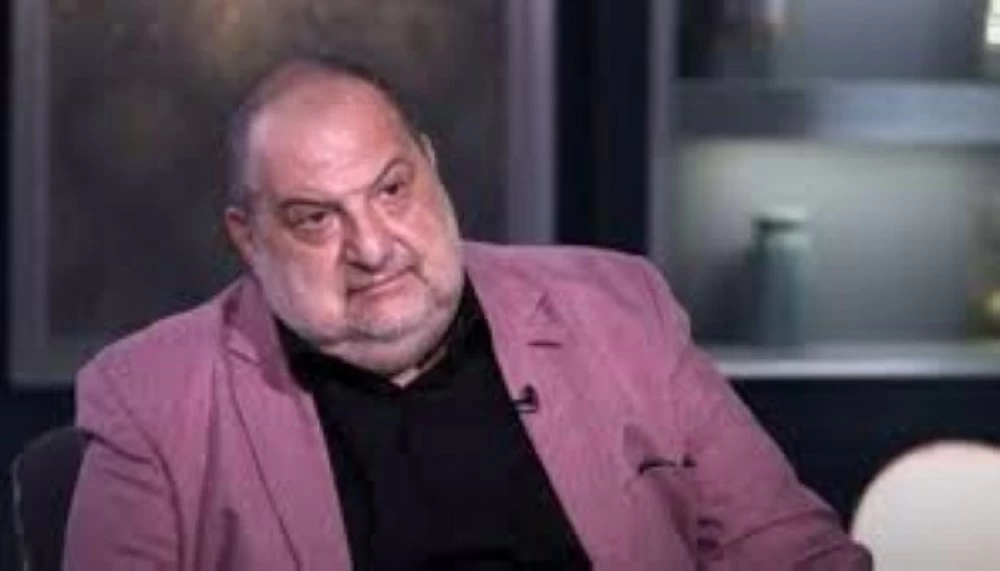
Artist Khaled El Sawy recounts the details of his difficult artistic journey, admitting his early failures and frustrations, and how he transformed into one of the most prominent stars of cinema and drama in Egypt and the Arab world.
Bold confessions at the book fair
At a public seminar held as part of the Cairo International Book Fair, the renowned Egyptian actor Khaled El Sawy revealed hidden aspects of his artistic career, offering candid confessions about his troubled beginnings that nearly ended his acting dreams. El Sawy acknowledged the failure of several projects he participated in, such as the films "El Fagoumy" and "Gamal Abdel Nasser," asserting that weak production values and poor artistic presentation were the reasons for their lack of success, and that he has no qualms about admitting this because it's no secret.
A failed actor and a journey of self-discovery
El Sawy described himself as a “failed actor” at the beginning of his career, unable to achieve any notable success despite his numerous theatrical appearances. He explained that this repeated failure plunged him into a deep psychological crisis, saying, “It got to the point where I would cry constantly in my room, alone, asking myself: Why do I love acting when it doesn’t love me back?” This difficult period, which lasted until he turned forty in 2004, reflects the significant challenges facing artistic talent in Egypt, where success requires a combination of talent, perseverance, and the right opportunity.
Turning point and great success
El Sawy noted that he first tasted true success with a theatrical performance titled “Playing with the Brain” at the Hanager Theatre in the Cairo Opera House. This work marked a pivotal turning point, opening doors to success in film and television drama later on. Following this theatrical success, El Sawy rose to become one of the most prominent stars of his generation, delivering unforgettable and complex roles in significant films that influenced Egyptian and Arab cinema, such as “The Yacoubian Building,” “Cabaret,” “The Wedding,” and “The Island,” which showcased his exceptional ability to portray diverse and intricate characters.
Childhood memories and the story of "Cabaret"
In a humorous anecdote from his childhood, El-Sawy recounted that he was a struggling student and was expelled from school in the fourth grade because of a short story he wrote titled “Cabaret.” He added, laughing, “I didn’t know the meaning of the word, but I was punished by being expelled,” which prompted him to secretly search for its meaning in cinemas, an early indication of his passion for the world of art and stories.
A multi-talented career
Khaled El Sawy was born in Alexandria in 1963. He graduated from the Faculty of Law at Cairo University in 1985 and then studied film directing at the Academy of Arts. This diverse background in law, directing, and acting gave him a unique depth in understanding the characters he portrays. He worked briefly in law and television directing before dedicating his life to acting. He also co-founded the Egyptian Society for Amateur Theatre and won important theatrical awards early in his career, confirming his solid theatrical roots that contributed to his great success later on.
-

 Local news two days ago
Landslide in Riyadh: Details of the incident in Al-Sahafa neighborhood and containment efforts
-
 Local News 3 days ago
The death penalty was carried out against a citizen who stabbed another to death in Tabuk
-

 Local News 4 days ago
First birth on the Riyadh train: A heartwarming story at Andalus station
-
 Culture and Art 7 days ago
Ramez Galal in Ramadan 2026: Details of the bloody prank show
-

 Local news two days ago
Riyadh collapse: Emergency plans to secure water after a main pipeline burst
-
 Culture and Art 2 days ago
Haifa Wehbe's absence in Riyadh: A photo crisis or a strained relationship with the media?
-
 Culture and Art 2 days ago
City Kitchen series: A drama of conflict and the middle class during Ramadan
-

 Culture and Art 2 days ago
The series "Kasra": Dawood Hussein in a moving social drama this Ramadan